How to Protect Personal Data from AI Tools: A Simple Guide
AI tools collect more than you think. Every prompt. Every file. Every chat. It gets stored. Used for training. A...
Gadgets & Technologies Are Together

Hashtags will not save a bad post but they can help a good one get seen. Most people get them wrong. They slap on #love and #photography. Their post drowns in seconds. Or they copy the same tags every time. The platform flags it as spam. Learning how to choose hashtags for social media posts is not complicated.
It takes five minutes. It makes a real difference. This guide shows you what works. Specific tags over broad ones. Fewer tags on Instagram. Different tags on each platform. Free tools that suggest ideas. And the mistakes that kill your reach. Read this before you post again.
The biggest mistake is chasing big numbers. Tags like #love have billions of posts . Your content disappears in seconds. Nobody scrolling that tag is looking for you. They are just scrolling.
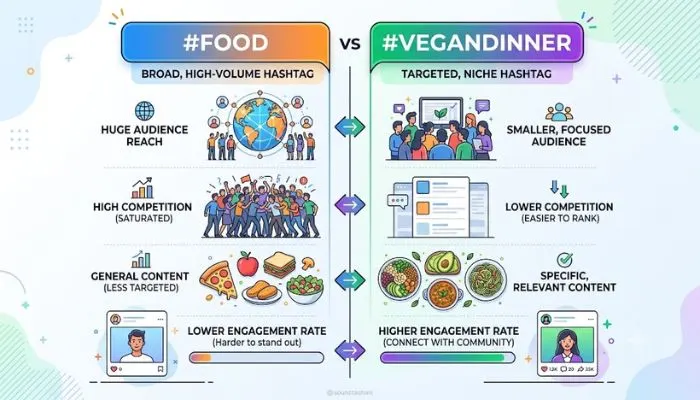
A good hashtag describes what is actually in your post. If you post a photo of a vegan dinner, use #VeganDinner. Not #Food. Not #Yummy. The more specific, the better. Niche tags have smaller audiences, but those people actually care about the topic .
Check the tag before you use it. Search it on the platform. Look at the top posts. Do they look like yours? Are they getting engagement? If the tag is full of unrelated content or spam, skip it .
Read More: How to Protect Personal Data from AI: Practical Steps That Work
Instagram changed the rules. In late 2025, the platform set a limit of five hashtags per post . You can use fewer. Many creators now use three to five . Some use just one or two.
This is not a punishment. It is a push toward quality. Instagram wants relevant tags, not a wall of spam.
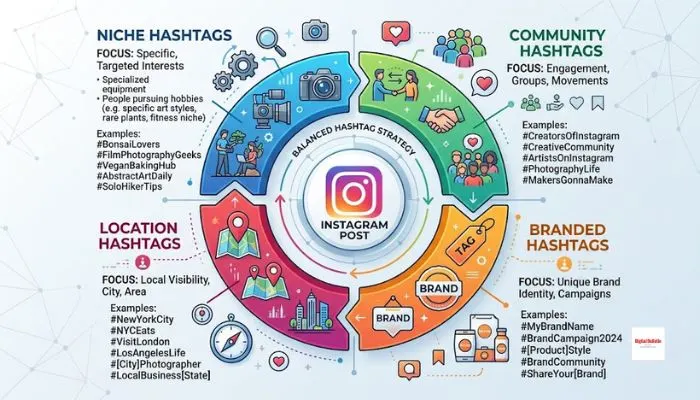
Do not use five identical tags. Mix different types .
Do not use all five slots for broad tags. Pick one or two broad tags if you want. But keep the rest specific.
Instagram is becoming a search engine. People search for phrases, not just hashtags. The platform now indexes your caption, alt text, and on-screen text . This means your words matter as much as your tags.
A post with "no-equipment home workout" in the caption AND #HomeWorkout in the tags gives the algorithm two ways to match you with the right audience. Skip either one and you lose reach .
Write natural captions that describe your content. Then add a few targeted tags. Do not stuff keywords. Just be clear about what the post is.
You do not have to guess. Free generators can suggest tags based on your topic. They save time. They also help you find tags you might not have thought of.
HashTy is a mobile app for iPhone and iPad. It generates hashtag mixes from a keyword, topic, or even an image. It also helps build captions and save reusable sets. The free version is available. Premium unlocks more features .
You May Also Read: How to Grow on Bluesky: Get Followers and Go Viral
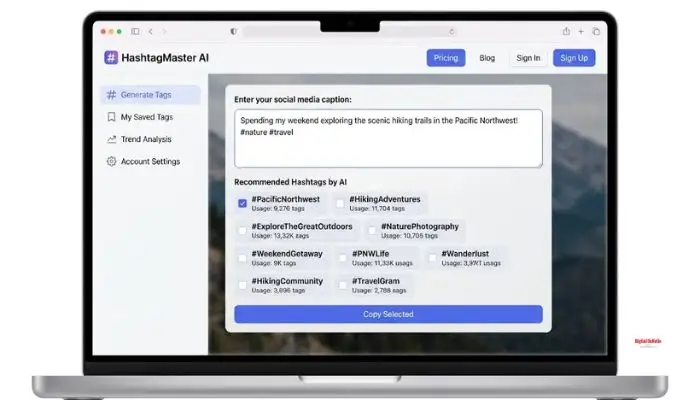
A generator is a starting point. Not a final answer. Here is how to use one without losing your voice.
Do not use the same number of tags everywhere.
Three to five. Instagram set a five-tag limit in late 2025. Using fewer, more relevant tags performs better than stuffing the maximum .
The best tags describe your specific content. Niche tags beat broad tags. #VeganMealPrep works better than #Vegan. Check the tag before using it to make sure it matches your post .
Platforms show trending tags. X has a trending section. TikTok and Instagram surface popular tags. But only use a trending tag if it actually fits your content. Irrelevant tags can hurt your reach .
Yes, as a starting point. They save time and suggest tags you might not think of. Buffer's generator is free and platform-specific. But always review the suggestions. Do not paste blindly .
No. Repetitive patterns look spammy. The algorithm can limit your reach. Vary your tags based on each post's actual content .
A tag unique to your brand or business. #YourBrandName. Use it on every post. Encourage followers to use it. It builds community and gives you user-generated content to reshare .
Yes. Using banned tags, irrelevant tags, or the same set repeatedly can reduce distribution. Irrelevant tags signal to the algorithm that you are trying to game the system .
Yes, but differently. They are not the main discovery tool anymore. Keywords in your caption and alt text matter more. But hashtags still help categorize your content and connect it to niche communities .