AI SEO Software Review for Small Websites: What Actually Works in 2026
Small website owners face a tough choice. You need SEO tools to rank. But most paid tools cost too much...
Gadgets & Technologies Are Together

Recurring deposit, or RD, is one of the simplest saving options for Indian users who want to save money in a fixed and steady way. In 2026, many people still prefer RD because it is easy to understand, does not need a large starting amount, and helps build a saving habit. If you are looking for the best Indian RD account interest rate 2026 review, this article will help you compare the main options in a clear and practical way.
An RD account lets you deposit a fixed amount every month for a fixed time period. At the end of the term, you get your total deposit plus interest. This works well for people who earn monthly income and want a safe place to grow savings without taking much risk.
RD is common among salaried people, small business owners, students, and senior citizens. It is also useful for people who do not want market-linked risk. The main point is simple: you save a fixed amount each month and get a fixed return after maturity.
Read More:JioFiber 500 Mbps India Review for Gaming: Honest Take from Users
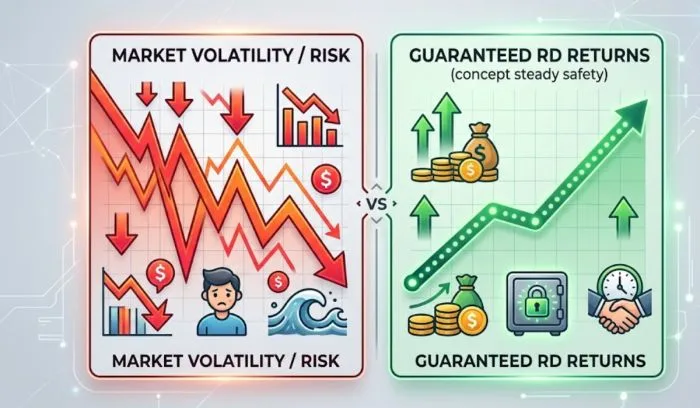
Many people think RD is old-fashioned, but it still has value in 2026. The reason is easy to understand. RD gives discipline. It removes the habit of spending all the money in hand. It also gives a clear maturity value, so you know what you will get after the term ends.
RD is also a safe choice for people who want predictable returns. Unlike shares or mutual funds, the return does not move up and down every day. This makes RD useful for short and medium savings goals like school fees, holiday planning, emergency savings, or future household needs.
YES Bank is one of the private banks that offers recurring deposit plans for different customer types. Many readers search for YES Bank RD interest rates because they want a bank-based RD option with easy account opening and regular monthly savings.
The interest rate usually starts around 6.00% to 7.00% per annum, depending on the tenure and bank policy. The exact rate can change based on the deposit period, amount, and bank policy. So, before opening an RD, it is important to check the latest rate directly with the bank or through its official page. In most cases, bank RD rates are linked to the tenure. Longer tenure may give a slightly different return than a shorter one. If you are comparing YES Bank with the Post Office, then do not look only at the rate.
Also check tenure options, minimum monthly deposit, penalty for delay, premature closure rules, monthly deposit flexibility, and maturity amount. A bank RD may suit you if you want online banking support, digital tracking, and faster service. For many users, convenience matters as much as return.
The Post Office RD is popular because it is backed by the Government of India. This makes many small savers feel more comfortable. The Post Office Recurring Deposit (RD) offers an interest rate of 6.7% per annum. Post Office is common because people want a safe and trusted saving option with simple rules.
Post Office RD normally has a fixed structure and is known for stability. It is often chosen by conservative savers who want security more than higher return. The scheme is easy to understand, and many people prefer it for long-term saving discipline.
When people compare Post Office RD with bank RD, they often find the Post Office more suitable for trust and safety, while banks may offer more digital convenience. The better option depends on your purpose. If your goal is peace of mind, the Post Office can be attractive. If your goal is easy online handling, a bank like YES Bank can be useful.
Here is a simple comparison to help you understand both options better.
| Point | YES Bank RD | Post Office RD |
|---|---|---|
| Type | Private bank RD | Government-backed RD |
| Safety feel | Good, but bank-based | Very high trust among small savers |
| Convenience | Better digital support | Simple, traditional process |
| Rate pattern | Varies by bank policy and tenure | Fixed under scheme rules |
| Best for | Users who want banking ease | Users who want safety and stable saving |
| Account style | More flexible banking features | Very simple and easy to follow |
This comparison shows that both are useful, but they serve different people. A person who prefers digital banking may like YES Bank RD. A person who wants a simple savings scheme with government support may prefer Post Office RD.
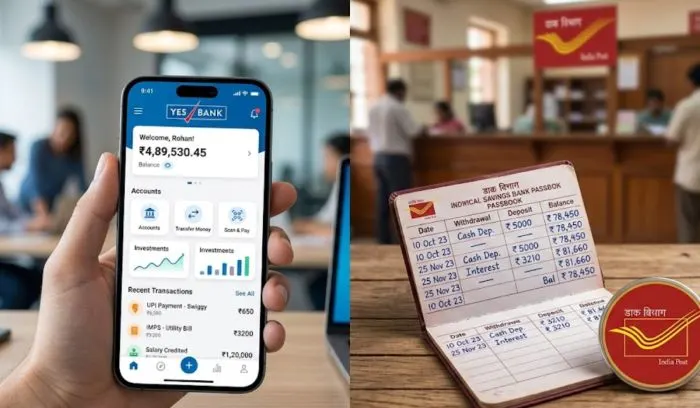
The better option depends on your needs.
Choose YES Bank RD if:
Choose Post Office RD if:
For most Indian users, the best choice is not only about the rate. It is about comfort, trust, and ease of use. A slightly better rate does not always beat a simpler process.
Before choosing any RD account, check these points carefully.
These details matter because they affect your final return. Many people look only at the headline rate and ignore the rules. That can lead to confusion later. A good RD plan should match your savings habit, not just your wish for a higher rate.
You May Read Also: Best Laptop Under 40000 with i7 Processor and 8GB RAM India
Suppose you save a fixed amount every month for several years. The final value will depend on the rate, the number of months, and how regularly you pay. If the rate is a little higher, your maturity value will also rise. But if you miss deposits or close the RD early, the return can reduce.
This is why RD works best for people who can save without break. It is not meant for random deposits. It is meant for steady saving. That is why it remains a useful tool for households that want discipline in money management.
The best Indian RD account interest rate 2026 review shows that RD is still a simple and useful savings option for Indian users who want steady growth with low risk. If you want banking convenience, YES Bank RD interest rates may suit you better. If you want trust and simple rules, Best RD interest rates Post Office can be a better choice for your needs. In the end, the right RD plan is the one that matches your monthly budget, saving habit, and comfort level.
The best Indian RD account interest rate 2026 review is about comparing RD options in India and understanding which one can suit your saving need best.
Yes, YES Bank RD interest rates can be a good option for regular savings if you want easy banking access and a simple monthly deposit plan.
Yes, Best RD interest rates Post Office plans are popular because many people trust the Post Office for safe and steady savings.
It depends on your goal. For digital ease, bank RD may be better. For trust and simple saving, best Indian RD account interest rate 2026 review often includes the Post Office as a strong option.
You should compare rates because the final maturity amount depends on the interest rate, deposit amount, and tenure. That is why checking YES Bank RD interest rates and Best RD interest rates Post Office is important before you decide.