Admin
November 10, 2026
7 min read
Latest AI Tools Features and Updates in November 2026: Top Apps and Free Tools
AI tools are moving fast. The latest AI tools features and updates in November 2026 show a clear shift. Models are getting smaller, cheaper, and more capable of handling complex work on their own. Meta released Muse Ember, a lightweight model with a 1 million token context window at low cost.
Anthropic launched Fable 5.2 and Mythos 5.2, with agents that coordinate over 1,000 sub-agents to build software. SenseNova 6.8 Flash added dynamic PPT and 3D scene generation. ChatGPT still leads the top apps. Free tools like NotebookLM, Perplexity, and HuggingChat cover most needs. This article covers the newest features, the top apps, and the best free options right now.
The Latest AI Tools Features and Updates
Meta Muse Ember: Small Model, Big Capability
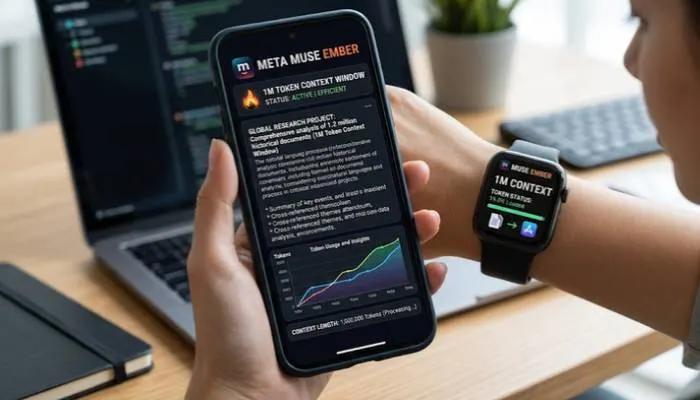
Meta released Muse Ember on November 9, 2026. It is Meta's smallest and most efficient model, built for complex reasoning and everyday agent work .
- The key numbers: a 1 million token context window, native understanding of text, images, audio, and video, and pricing at $0.10 per million input tokens and $0.50 per million output tokens . That makes it significantly cheaper than comparable models. In Artificial Analysis benchmarks, its performance matched Claude Haiku 5.5 but at one-third the cost per task .
- What makes it useful: it can carry workflows across apps, call tools in sequence, run tests, and make targeted code fixes. For developers building agents that run all day, the cost efficiency matters.
Meta also brought its Muse agent to Apple Watch and Wear OS. You can talk to it via voice or text to book tickets, track expenses, and audit subscriptions .
Read More: Upcoming Features in Popular Apps: AI, Privacy and More
Anthropic Fable 5.2 and Mythos 5.2: Agents That Build Software
- Anthropic released Claude Fable 5.2 and Claude Mythos 5.2 on November 9, 2026 . The headline achievement: Fable 5.2 coordinated over 1,000 AI agents to build a working operating system from an empty folder in eight days. The OS boots on a laptop and includes a kernel, drivers, file saving, window display, and a login screen .
- It also converted Fermat's Last Theorem into a computer-verifiable format in about 30 hours using 1,000 agents .
- Pricing dropped: input tokens fell from $10 to $8 per million, and output from $50 to $40 per million. Response speed is up to 30% faster . Mythos 5.2 has fewer restrictions and is available to organizations that pass a review process.
SenseNova 6.8 Flash: Dynamic PPT and 3D Scene Generation
- SenseTime released SenseNova 6.8 Flash on November 3, 2026 . The model outperforms some international frontier models in agent collaboration, data analysis, and presentation generation.
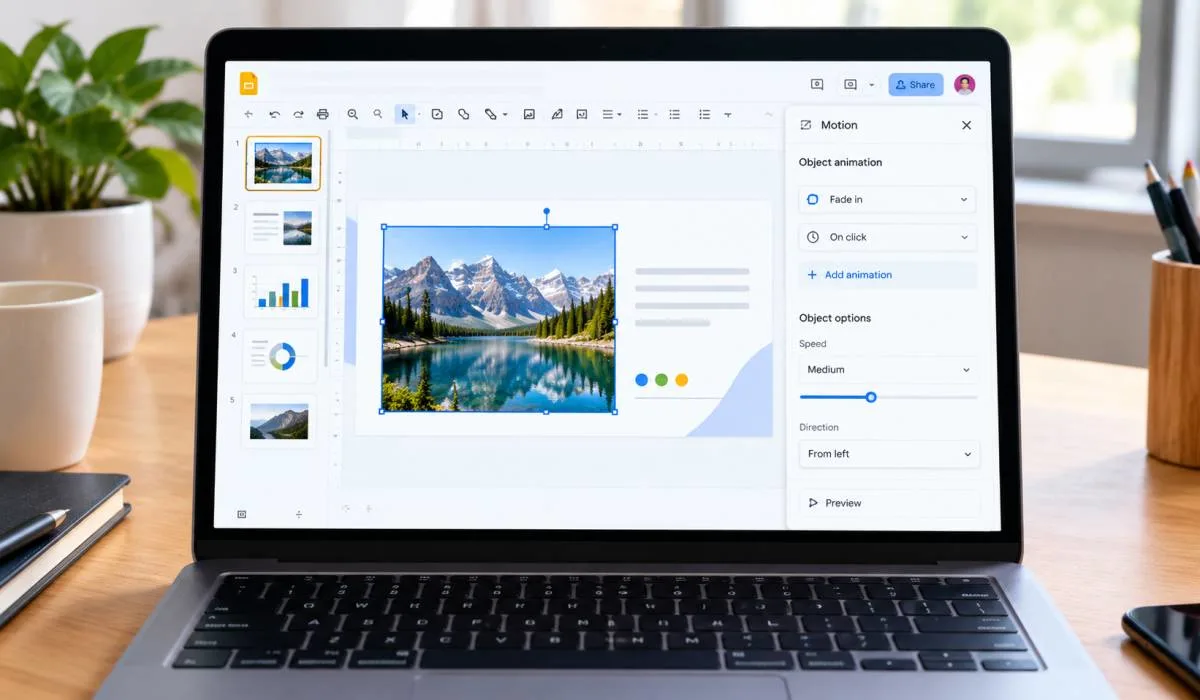
- The design features stand out. It can generate dynamic PPTs, dynamic posters, and 3D scenes. It integrates with tools like Figma. Its agent can work with Blender, iterating based on render results and user feedback to output editable project files .
- It also has long-term memory and proactive interaction. If a product upgrade fixes a missing feature, the model can identify customers who previously declined and suggest following up .
OpenAI Dots: Multi-Computer Agents
OpenAI now lets a single dot agent connect to multiple local computers. You can choose which machine it uses for each task. For example, it can build and test an app on a dedicated machine while you keep coding on your laptop .
Top 5 AI Apps in the World
Based on web traffic and monthly active users, the rankings remain stable at the top.
- ChatGPT still dominates. As of September 2026, it accounted for 81.2% of global usage sessions among six major AI chatbots. Monthly sessions hit 61.35 billion, up 24% year on year. Weekly active users reached 1.2 billion .
- Gemini grew 182% over the past year but still holds less than 10% share . It integrates deeply with Google services.
- Claude posted the fastest growth, up 1,901% year on year, though from a smaller base . The new 5.2 models strengthen its position for coding and agentic work.
- Canva ranks third on the web by traffic, positioned as a full AI-powered design platform .
- DeepSeek and Perplexity round out the top web rankings. On mobile, CapCut ranks high because of its AI video features .
Best Free AI Tools for Everyday Use
You do not need to pay for most tasks. These free tiers are genuinely usable.
- ChatGPT Free covers basic chat, file uploads, image generation, and voice. The free tier uses GPT-5.6 Luna with lower usage limits . For general work, it is enough.
- Claude Free gives access to Sonnet 4.6 and Opus 4.6. It handles long documents well. Upload a 50-page PDF and ask for a summary. Privacy controls let you opt out of training .
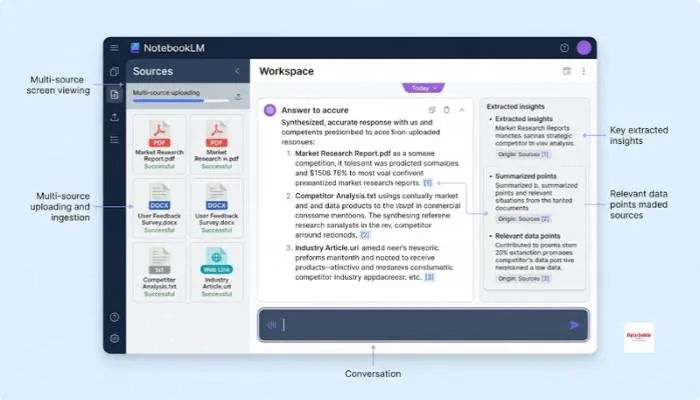
- NotebookLM is the best free tool for research. Upload up to 50 sources per notebook. It answers using only your sources, so no hallucinated facts. The free tier includes 100 notebooks, 50 chats per day, and 3 Audio Overviews per day .
- Perplexity offers unlimited basic searches and about five Pro searches per day. It provides cited answers with real-time web access .
- Gamma gives 400 credits for AI presentations. The output looks designed, not templated .
- Zapier Free connects over 7,000 apps for automation. Basic workflows are included .
- Canva Free includes AI design tools, templates, and image generation. The best option for beginners who need visuals fast .
Powerful AI Tools That Cost Nothing
Some tools are fully free, not just free-tier limited.
- HuggingChat is fully free with no login required. It routes to Llama, Mistral, Qwen, and other open models .
- Kimi K2 offers unlimited web chat with strong long-document reasoning. The K2 Thinking model is one of the strongest open-source reasoners .
- Meta AI has no practical cap inside WhatsApp, Instagram, and Messenger. It uses Llama 4 .
- Semantic Scholar is fully free. It provides AI-generated TLDRs and citation graphs for over 200 million academic papers .
- Research Rabbit is fully free with no card. It visualizes citation networks like a "Spotify of papers" .
The Bottom Line
The latest AI tools are getting cheaper and more capable. Meta's Muse Ember proves that small models can match larger ones at a fraction of the cost. Anthropic's 5.2 models show that AI agents can now coordinate at scale to build real software. SenseNova adds professional design integration.
Free tools cover most everyday needs. ChatGPT, Claude, NotebookLM, and Perplexity are genuinely useful without paying. For unlimited use, HuggingChat and Kimi K2 offer no-cost options.
Pick the tool that fits your task. Test the free tier first. Upgrade only when you hit real limits. The gap between free and paid is narrowing, and the free options are better than ever.
FAQs
1. What are the latest AI tools features in November 2026?
Meta released Muse Ember, a lightweight model with a 1M token context window at low cost. Anthropic launched Fable 5.2 and Mythos 5.2, with agents that can coordinate over 1,000 sub-agents to build software. SenseNova 6.8 Flash added dynamic PPT and 3D scene generation with Figma and Blender integration.
2. What are the top 5 AI apps in the world?
ChatGPT leads with 81.2% of chatbot usage sessions. Gemini is second with under 10% share. Claude grew fastest at 1,901% year on year. Canva ranks third on the web by traffic. DeepSeek and Perplexity complete the web top five.
3. What is the best free AI tool for research?
NotebookLM is the best free tool for source-grounded research. Upload up to 50 sources and get answers with no hallucinated facts. Perplexity is best for web research with citations.
4. Is there a completely free AI tool with no limits?
HuggingChat is fully free with no login. Kimi K2 offers unlimited web chat. Meta AI has no practical cap inside Meta apps. Semantic Scholar and Research Rabbit are fully free for academic work.
5. What is Meta Muse Ember?
Meta's smallest and most efficient AI model. It has a 1M token context window and native multimodal understanding. It costs $0.10 per million input tokens and $0.50 per million output tokens. Performance matches Claude Haiku 5.5 at one-third the cost.
6. What is the best free AI presentation tool?
Gamma gives 400 free credits and produces clean, designed output. Canva Free includes AI design tools and templates. Both export to PowerPoint.
7. Can I use AI for free without creating an account?
HuggingChat is fully free with no login required. Most other tools require an account. Meta AI works inside Meta apps without a separate account.
8. What is the best free AI tool for coding?
Claude Free includes Sonnet 4.6 and Opus 4.6, which handle coding well. DeepSeek offers unlimited chat with strong reasoning. For free coding agents, the paid tiers of Claude and ChatGPT offer more, but the free tiers are usable for learning and small tasks.