Hybrid Cloud Solutions for Businesses: A Complete Guide
Businesses today face a choice. Move everything to the public cloud. Keep everything on-premises Or find a middle ground. That...
Gadgets & Technologies Are Together
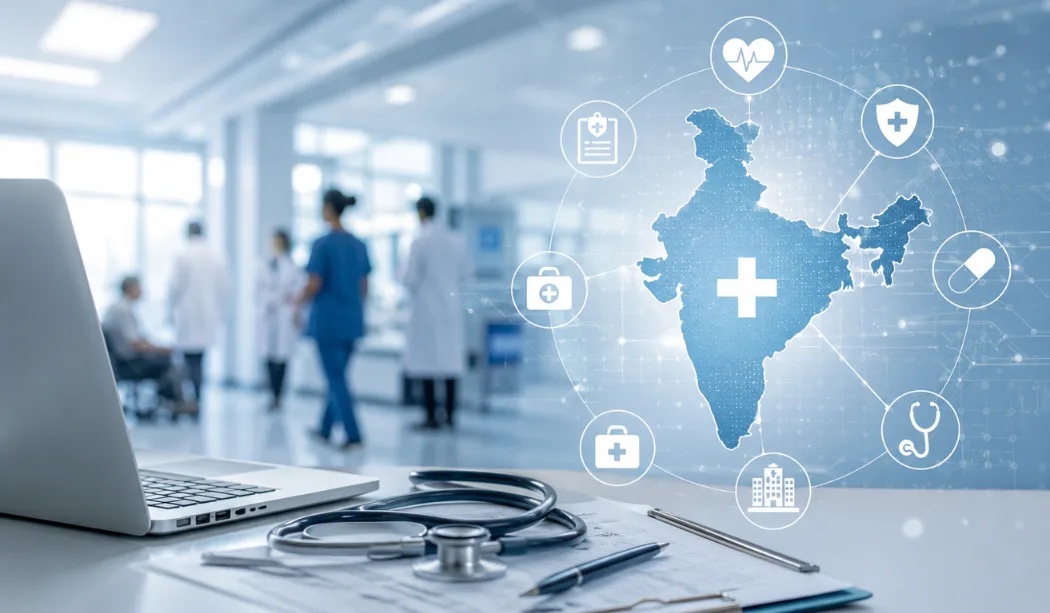
The health system in India is expanding more quickly than it has ever been. Innovative technologies and large investment are transforming the way people access medical services. Families are interested in knowing new developments in the medical field, hospitals as well as medical procedures. Being informed with indian healthcare sector news will be the most efficient way to be aware of the changes. From the smallest village clinics, to huge city hospitals, huge changes occur every day. We will take a look at the changes happening currently in the nation's healthcare system.
The medical field within India has a lot of important developments this year. The top ten current developments taking place across the nation:
Read also: How to Apply for PAN Card Online in India (2026 Step-by-Step Guide)
Medical experts believe that India is moving away from the treatment of patients with illnesses to catching illness before it gets too serious. A lot of people read news from the Times of India health News Today to monitor the changes happening each week. Private hospital organizations have been expanding to smaller cities and public hospitals receive major improvements.
The most recent pharma and health information from India illustrates manufacturing factories that are developing locally-made, inexpensive surgical instruments. Patients do not need to shell out huge sums for medical equipment that is imported.
The health budget announcements for India 2026 provided good news to all. The government has allocated 1,063,530 crore dollars for the Ministry of Health and Family Welfare. It's a 10% increase over previous records which will help improve the infrastructure in all states.
Significant health policy changes in India have a clear emphasis on cutting down on out-of-pocket expenses to regular people. Recent laws have made it simpler for pharmacies that sell generic medicines to be opened near public transportation stations, and allow customers to purchase premium medications for very little cost.
When you examine Indian medical industry news of today the most prominent trend is the digital growth. Many people have opened ABHA accounts in order to store their medical records on the internet.
Medical experts monitoring health sector news India 2026 observe that the top hospitals networks are investing heavily into local tests. The trend will ensure that patients in areas that aren't big cities get the highest quality laboratory test results in just several hours.
The Indian insurance sector for health reports is reporting a dramatic increase in claims that are cashless. Insurance companies now have to process hospital claims in the network quicker, thereby saving families from stress-inducing delays in health emergencies.
Significant Indian healthcare plans reveal that leading hospital chains are creating more multi-specialty hospitals in smaller cities. The aim is to ensure that high-quality critical care is accessible to patients without the need for long distance journeys to capital cities of the state.
Although there has been great advancement however, serious medical problems remain in the United States. An increasing number of chronic non-communicable disease (NCDs) such as high blood pressure and diabetes creates a huge strain on family savings. More than 90 million people in India are affected by diabetes and this increase continues each year.
A further major issue is the shortage of physical doctors and nurses. The research shows that India requires more than 1.6 million doctors as well as 6.5 lakh nurses within the next few days in order to meet the basic standard of safety. There are just 1.6 beds for each 1,000 persons, which is less than the safety level recommended by experts.
Artificial Intelligence is changing the treatment of patients throughout the nation. AI instruments can scan thousands of X-rays as well as eye scans within seconds to detect hidden tumors and ailments. The technology helps local doctors detect serious illnesses earlier, even when specialist radiologists are far from them.
The advancement of technology in smart tech has moved from data storage that is purely digital to active decision-making. The most advanced AI instruments integrate genetic tests and normal blood results to identify whether a person is likely to develop problems with the heart that can take years before symptoms begin to manifest.
The Indian health updates for rural areas reveal that health digital systems are helping bridge the rural and urban gap. Clinics in small villages called Ayushman Arogya Mandirs have carried out hundreds of crores of screenings to check blood pressure and diabetic.
Additionally, the government's eSanjeevani platform has served more than 36 million patients via online video-calls. So, a farmer from an isolated village could consult the top doctor in a hospital within the city using the basic screen of a smartphone.
Read also: Aadhaar Card Latest News: New Rules 2026 and Supreme Court Updates
The most recent news from the healthcare indicates that the national pharmaceutical market is undergoing a major upgrade of the standards for testing. Laboratory facilities must obtain strict assurances of quality that ensure each one of the pills sold is efficient and safe.
Expert Insights: "We are moving towards a new era of smart healthcare. Technology is not just an instrument for digital use and a passive partner that assists doctors to make quicker and more precise decisions regarding patients' treatment." --- Deepak Sahni Healthcare Industry Leader
The government has allocated record 1,06,530 crore rupees in medical services, representing an increase of 10 percent over the previous budget.
The PM-JAY program provides un-cashable, non-deductible hospital care that can be five lakh rupees annually for family members who are eligible.
The federal government has completely eliminated import duty on customs-related 17 essential cancer drugs and reduces total treatment expenses.
It's a 10,000-crore rupee program aimed at studying and producing affordable, modern bio medicine locally in India.