Blockchain Technology Trends News: Tokenization Goes Mainstream in 2026
Blockchain technology trends news in 2026 shows a clear shift. The era of experimentation is over. Major financial institutions are...
Gadgets & Technologies Are Together

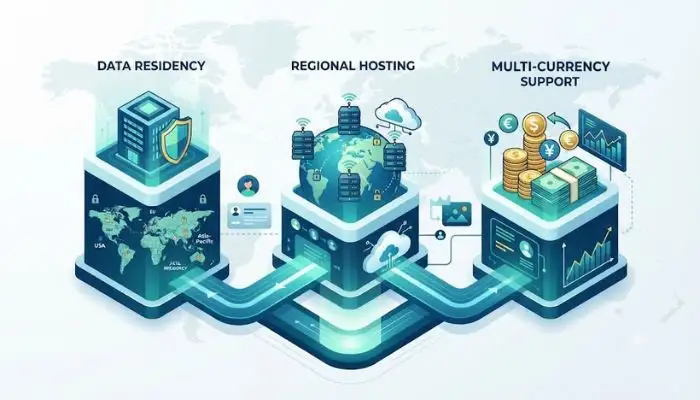
Global companies face challenges smaller businesses do not. Data residency laws. Multi-currency transactions. Multilingual teams. Regional compliance. A CRM that works in one country may fail in another. The wrong choice creates legal risk and frustrated teams.
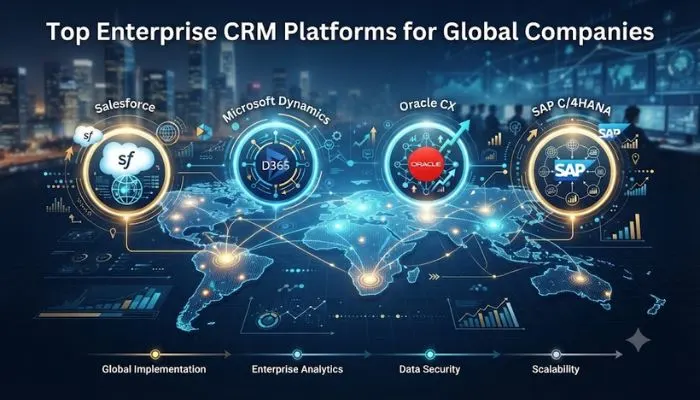
This article covers the best enterprise CRM for global companies in 2026. Salesforce leads with Hyperforce for regional hosting. Oracle offers strong enterprise governance. HubSpot deploys globally in weeks. SAP C/4HANA is best for SAP-centric organizations. Zoho serves APAC and emerging markets. We cover data residency, implementation speed, and integration needs. No fluff. Just clear guidance to help you pick the right platform for cross-border operations.
Global CRM is not just local CRM scaled up. It requires specific capabilities.
Read More: India AI Mission Latest News: 7 Pillars and 2026 Updates
Salesforce leads the enterprise CRM market. ISG Research ranks it first overall with an A- grade and 84.2% performance score . It earned Leader status in five categories, the most of any provider.
Global capabilities:
Hyperforce allows regional hosting in approved cloud locations. Companies can run Salesforce in specific countries while keeping core features intact .
A Swiss pharmaceutical company with 70+ Salesforce organizations across Europe used Hyperforce to meet EU and Swiss data residency requirements .
Australian and New Zealand telecom providers deployed Salesforce in-country to keep sensitive data within national borders .
Strengths:
Largest integration ecosystem (AppExchange, MuleSoft)
Deep customization for complex global processes
Strong AI capabilities with Agentforce
Weaknesses:
Complex and expensive to implement
Requires dedicated administrators
Over 70% of implementations are partner-led, adding consulting costs
Oracle ranks second in ISG's overall scoring with an A- grade and 82.4% performance . It is a Leader in five categories alongside Salesforce.
Global capabilities:
Strong data residency and partner coverage across North America, LATAM, EMEA, and APAC
Deep integration with Oracle's ERP and cloud infrastructure
Governed agentic AI through scoped agent teams
Strengths:
Enterprise-grade platform foundation
Strong governance and scalability
Good for organizations already using Oracle systems
Weaknesses:
Less third-party integration than Salesforce
Complex implementation
HubSpot ranks third in ISG's scoring with a B++ grade and 81.1% performance . It earned Leader status in three categories.
Global capabilities:
GDPR-compliant data storage with EU data centers from the Starter tier
Multilingual workflows and dashboards in 20+ languages
Open API for integration with ERP, e-commerce, and local systems worldwide
Quick global rollout in weeks rather than months
Strengths:
Intuitive interface for faster team adoption
Transparent, modular pricing
Faster implementation than SAP or Salesforce
Weaknesses:
Limited deep customization compared to SAP
SAP ERP integration is possible but not as deep as SAP C/4HANA
Some enterprise features for very large organizations are limited
SAP is designed for organizations already running SAP ERP. It offers the deepest integration with SAP systems.
Global capabilities:
Seamless connection to SAP ERP, S/4HANA, and other SAP products
Highest standards for data protection, data sovereignty, and auditing
Deep customization for complex global business processes
Omnichannel control across sales, marketing, and service in all countries
Strengths:
Native integration with SAP ecosystem
Enterprise compliance and data sovereignty
Optimized for thousands of users in complex organizations
Weaknesses:
Complex implementation (months to years)
High costs for licensing, customization, and operations
Requires SAP expertise; steep learning curve
Fewer third-party integrations
Zoho is a Challenger in Gartner's Magic Quadrant. It offers broad CRM capabilities with particularly strong APAC and emerging-market coverage .
Global capabilities:
Data residency options and localized interfaces across North America, LATAM, EMEA, and APAC
Strong regional partner network
Zia AI assistant with unified intelligence layer
Strengths:
Expansive global footprint
Good for distributed buyers in APAC, MEA, and emerging markets
Low-cost, wide application suite
Weaknesses:
Zia is primarily optimized for desktop; mobile parity is limited
Not optimized for complex, high-volume prospecting
Noticeable latency and generic outputs in AI features
| CRM | ISG Grade | Best For | Data Residency | Implementation |
|---|---|---|---|---|
| Salesforce | A- (Leader) | Complex global enterprises | Hyperforce regional hosting | Months (partner-led) |
| Oracle | A- (Leader) | Oracle ecosystem users | Strong global coverage | Months |
| HubSpot | B++ (Leader) | Fast global rollout | EU data centers available | Weeks |
| SAP C/4HANA | B+ | SAP ERP users | Enterprise-grade sovereignty | Months to years |
| Zoho | B+ | APAC/emerging markets | Multiple regional options | Moderate |
You May Also Read: Latest AI Developments in India 2026: Key AI Growth
Enterprise CRM for global companies requires more than features. It requires architecture that respects data sovereignty, supports multiple languages and currencies, and integrates with regional systems. Salesforce leads the market with Hyperforce for regional hosting. Oracle offers a strong enterprise alternative. HubSpot provides faster global rollout with EU compliance. SAP C/4HANA is the choice for SAP-centric organizations. Zoho serves APAC and emerging markets well.
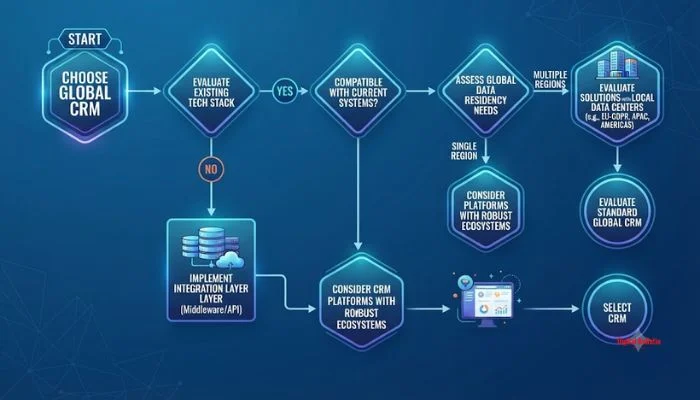
The right choice depends on your existing systems, regulatory requirements, and implementation timeline. Start with your data residency needs. Then match the platform to your stack and speed requirements.
Salesforce leads the market. ISG Research ranks it first overall. It has Hyperforce for regional hosting. This lets companies keep data in approved countries. Oracle and HubSpot are also strong options. The best choice depends on your existing systems and data residency needs.
Different countries have different laws. The EU has GDPR. India has sector-specific rules. China ties data to national security. A global CRM must keep regulated data within approved jurisdictions. If it does not, you face legal risk and fines.
It is Salesforce's architecture for regional hosting. Companies can run Salesforce in specific countries while keeping core features. A Swiss pharma company with 70+ Salesforce orgs used it to meet EU and Swiss data rules.
HubSpot. It rolls out in weeks rather than months. It offers EU data centers from the Starter tier. It supports 20+ languages. This makes it good for companies that need quick global deployment.
SAP C/4HANA. It has the deepest integration with SAP ERP and S/4HANA. It offers the strongest data sovereignty and auditing controls. But implementation takes months to years. It requires SAP expertise.
Zoho. It has broad geographic coverage. Strong partner networks in APAC, MEA, and emerging markets. It offers data residency options and localized interfaces. It is a Challenger in Gartner's Magic Quadrant.
Start with your existing stack. If you use SAP, choose SAP. If you use Oracle, choose Oracle. Check data residency requirements first. Consider implementation speed. Evaluate AI capabilities. Test with regional teams before committing.
Data residency compliance. Multi-language and multi-currency support. Integration with regional ERPs and payment systems. Regional hosting costs. Partner-led implementations that add consulting expenses. These are the main hurdles for global companies.