Blockchain Technology Trends News: Tokenization Goes Mainstream in 2026
Blockchain technology trends news in 2026 shows a clear shift. The era of experimentation is over. Major financial institutions are...
Gadgets & Technologies Are Together
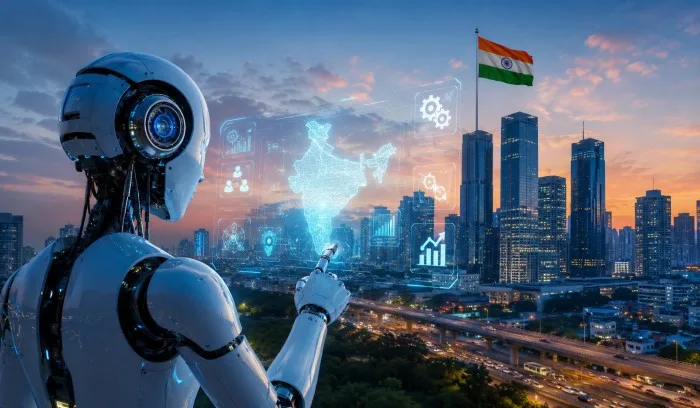
India is moving fast in artificial intelligence. The country has shifted from talking about AI to actually building it. Latest AI developments in India 2026 show a clear picture. The India AI Impact Summit held in New Delhi brought global leaders together. Over 2 lakh people attended.
The government announced the New Delhi Frontier AI Commitments. The IndiaAI Mission is backing 20 indigenous models. Sarvam AI and Emergent became unicorns. The government is using AI for public services like agriculture and insurance.
India hosted the India AI Impact Summit 2026 in New Delhi from February 16 to 20. Prime Minister Narendra Modi inaugurated the event at Bharat Mandapam. Over 2 lakh people attended the summit across five days. It was one of the world's largest AI events.
The summit brought together global AI leaders. Sundar Pichai (Google), Sam Altman (OpenAI), Demis Hassabis (Google DeepMind), and Dario Amodei (Anthropic) were among the speakers. They joined Indian innovators like Sarvam AI, BharatGen, and Gnani.ai.
The event covered over 700 sessions on topics like AI safety, governance, ethics, and India's indigenous AI policy. The India AI Impact Summit 2026 venue included Bharat Mandapam, Sushma Swaraj Bhawan, Vigyan Bhawan, and Dr. Ambedkar Bhawan.

At the summit, the government announced the New Delhi Frontier AI Commitments. These are voluntary agreements signed by leading frontier AI companies and Indian innovators. The framework has two main goals.
Union Minister Ashwini Vaishnaw said, "AI is a foundational technology. It is already transforming how we work, learn, and make decisions. Our Prime Minister's vision is to democratize technology, deploy it at scale, and make it accessible to all".
The IndiaAI Mission is the backbone of India's AI push. Approved in March 2024, it has an outlay of Rs 10,371.92 crore over five years. The mission supports computing infrastructure, foundational models, applications, research, and responsible AI.
In August 2026, the government announced it had selected 20 indigenous foundation model proposals for support. The selection came from 506 applications. The proposals include 12 large multimodal models and 8 small language models. The intellectual property stays with the developers.
Among the models already launched are:
The government has also sanctioned over 93 lakh hours of subsidised computing capacity for 237 projects. It has empanelled 15 computing service providers. A high-performance AI computing system of around 1.1 exaflops is being set up at NIC's data centre in Shastri Park, Delhi.
The government has approved 58 AI centres of excellence across states and Union territories. Work has begun on 22 centres in 13 states. Eleven national-level hackathons have resulted in 62 AI prototypes, with 20 already deployed in public-sector institutions.
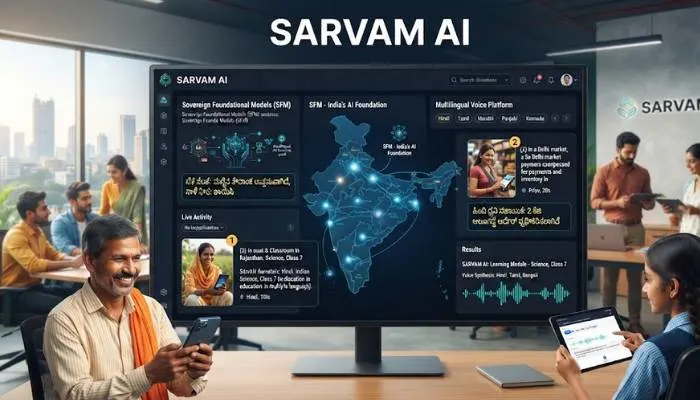
Sarvam AI has emerged as the leading Indian AI startup in 2026. In June, the company raised $234 million in the first tranche of its Series B round at a $1.5 billion valuation. HCLTech led the round with $150 million. Bessemer Venture Partners, Khosla Ventures, and Peak XV Partners also participated.
Sarvam trains its own models from scratch in India. It does not just fine-tune foreign models. The company's two models, Sarvam 30B and Sarvam 105B, are completely trained in India. The 30B model is made for real-time conversational use. It has a mixture-of-experts architecture and supports 32,000-token context. The 105B model is for complex reasoning, coding, and Indian language processing. It outperforms several leading global models.
The company's Sarvam Vision model is digitising over 35 million pages. Its speech models transcribe more than 500,000 hours of audio every month. Its conversational platform handles more than 2 million interactions daily.
Sarvam's multilingual voice platform was used to collect data from 17 million farmers for the Ministry of Agriculture. A voice campaign for an insurance provider helped support policy renewals for 45 million policyholders.
The company also announced Kaze, a line of smartglasses for frontline workers who cannot be on their phones or computers at all times. The glasses run Sarvam's AI agents and come with a subscription.
In July 2026, Emergent raised $130 million at a $1.5 billion valuation. The round was led by Creaegis. Khosla Ventures, SoftBank's Vision Fund 2, Lightspeed, and Y Combinator also participated. Emergent helps small businesses build applications using AI.
The Ministry of Minority Affairs is using AI to strengthen governance and service delivery. The ministry is exploring AI-enabled multilingual chatbots, virtual assistance, and intelligent digital interfaces. These include services for Haj like the Haj Suvidha App. The ministry works with sovereign AI companies under the IndiaAI Mission framework.
The government also released the India AI Governance Guidelines on November 5, 2025. The guidelines provide a framework for responsible AI development based on trust, accountability, and safety. The Digital Personal Data Protection Act, 2023, applies to AI systems that process personal data.
India ranks third globally in AI competitiveness and ecosystem vibrancy, according to Stanford's Global AI Vibrancy Report of November 2025. India is also the second-largest contributor to AI projects on GitHub. The country's digital public infrastructure and AI talent base are key advantages.
The latest AI developments in India 2026 show a country moving fast. The India AI Impact Summit brought global leaders together. The New Delhi Frontier AI Commitments set a framework for responsible deployment. The IndiaAI Mission is backing 20 indigenous models and 58 centres of excellence. Sarvam AI and Emergent have reached unicorn valuations.
It was a big AI event in New Delhi. Over 2 lakh people came. Leaders like Sundar Pichai and Sam Altman spoke. The government announced the New Delhi Frontier AI Commitments. These are voluntary rules for using AI responsibly.
Two things. First, sharing anonymized data on how AI is used. This helps track AI's impact on jobs and productivity. Second, testing AI systems across Indian languages. This makes sure AI works for everyone, not just English speakers.
Sarvam AI hit $1.5 billion valuation in June. Emergent reached $1.5 billion in July. Sarvam builds its own models from scratch in India. Emergent helps small businesses use AI.
The mission has Rs 10,371 crore over five years. It picked 20 Indian AI models for support. 12 are large, 8 are small. The government also approved 93 lakh hours of computing capacity. 58 AI centres are being set up across states.
The Agriculture Ministry used AI to collect data from 17 million farmers. An insurance company used AI voice campaigns for 45 million policyholders. The Minority Affairs Ministry is testing AI chatbots for Haj services. AI Governance Guidelines were released in November 2025.