Which Technology Is Trending Today? Top Tech Trends 2026
Technology moves fast. What was hot last year is old news now. The question "which technology is trending today" has...
Gadgets & Technologies Are Together
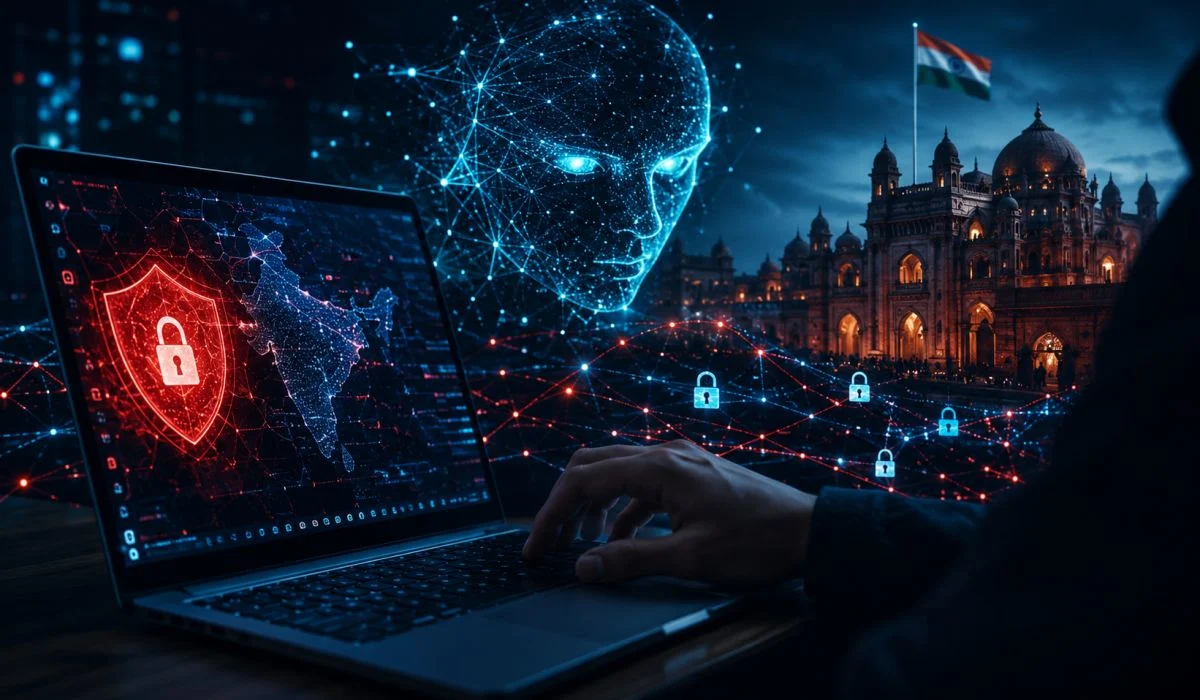
Cyber attacks are rising fast in India. The numbers are clear. Cybersecurity threats news today shows breach costs hit a record Rs 25.5 crore this year. That is up 16 percent from last year. Hackers now use AI to make attacks faster and harder to spot. Phishing remains the top threat.
Power plants and nuclear sites are being targeted more often. CERT-In is using AI to catch fake domains. They also ran security drills with over 1,400 people. But companies need to step up too. Most firms are not ready. This article covers the latest threats and what you can do to stay safe
The average cost of a data breach in India hit a record Rs 25.5 crore in 2026. This is a 15.9 percent jump from Rs 22 crore last year . The number of records stolen per breach also went up. Nearly 39,500 records are now compromised per incident .
The financial sector is taking the biggest hit. Banks and financial firms face an average breach cost of Rs 40.9 crore. Tech companies come next at Rs 35.7 crore. Communications firms are at Rs 34.5 crore .
Read More: Trending Government Technology News 2026: AI and Digital India
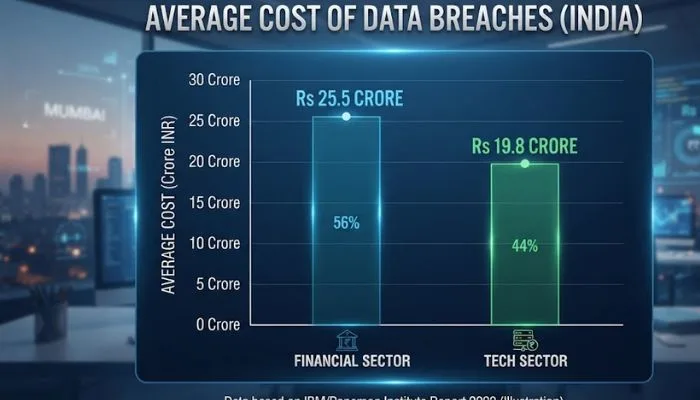
Here is the worrying part. 26 percent of malicious data breaches in India are now AI-generated . Hackers are using AI to make their attacks faster, more sophisticated, and easier to scale. They can now automate reconnaissance, exploit vulnerabilities quickly, and create convincing phishing messages in multiple languages .
But most Indian companies are not prepared. Only 32 percent of organisations have fully deployed AI for security and automation. 36 percent have limited adoption. 32 percent have none at all . The gap is clear. Companies without AI security spend an average of Rs 31.6 crore per breach. Those with full AI deployment spend Rs 21.3 crore . That is a big difference.
Phishing is still the most common way hackers get in. It accounts for 19 percent of breaches in India. This includes voice and SMS phishing, not just emails. Drive-by compromise follows at 16 percent. Supply chain attacks make up 15 percent .
A recent case shows how dangerous this has become. A school dropout from Kanpur built an AI-powered fraud network. He created fake banking and government apps. He sold them to cybercriminals for Rs 15,000 per month. His apps were installed on over 21,000 phones. They enabled 54,000 fraudulent transactions worth about Rs 64 crore . He was arrested in July 2026.
India's critical infrastructure is facing serious threats. The Kudankulam Nuclear Power Plant was hit by a ransomware group called World Leaks in 2026. They leaked nearly 19,000 files. The data came from a contractor, not the plant's core systems. But the breach exposed engineering drawings, supplier information, and insurance records . The plant has faced attacks before. In 2019, malware linked to North Korea's Lazarus Group infected its administrative network .
The power sector alone witnessed nearly 200,000 attempted cyber intrusions . India recorded over 265 million cyberattack attempts and 369 million malware detections during a recent assessment period . Around 1.5 million attacks were observed during a single operation called Operation Sindoor .
Claims of DRDO design documents being leaked have also raised concerns about cyber governance in strategic sectors .
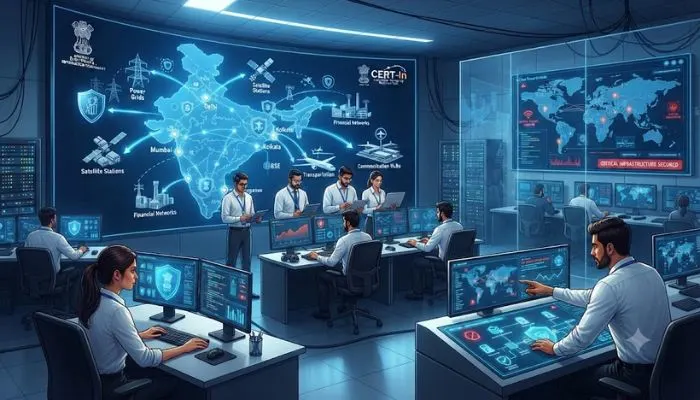
The government is taking action. CERT-In has deployed AI-driven systems to identify malicious domains and phishing activities . In June and July 2026, CERT-In conducted 10 cybersecurity exercises. The theme was "Building Resilience against Frontier AI-driven Cyber Threats." It brought together 1,470 participants from 345 government and private organisations .
The government is also investing in skills. The Certified Security Professional in Artificial Intelligence (CSPAI) programme aims to train professionals to secure AI systems .
The threats are not limited to India. The European Union sanctioned nine individuals and four entities linked to Russia's Turla cyber operations . US and German law enforcement dismantled a phishing platform called Kratos. It targeted Microsoft 365 users across multiple countries . Spain arrested an alleged member of Russia-linked CyberArmy of Russia Reborn .
Globally, ransomware groups are combining data theft with public disclosure. They are not just encrypting systems anymore. They are leaking sensitive information to pressure victims into paying . AI-driven phishing is also making attacks more convincing and harder to detect .
You May Also Read: Upcoming Technology Innovations in 2026: Top Trends Shaping the Future
The threat landscape is changing fast. Hackers are using AI. They are targeting critical infrastructure. They are going after contractors and supply chains. The cost of a breach is high and rising.
The message is clear. Organisations need to invest in AI-powered security. They need to train their people. They need to secure their supply chains. Phishing awareness is no longer optional. It is essential. The government is stepping up, but companies must do their part too.
Cybersecurity threats news today shows a difficult picture. Breach costs are at record highs. AI is making attacks faster and more sophisticated. Phishing remains the top threat. Critical infrastructure is under attack. The government is responding with new measures. But companies need to do more. Investing in AI security, employee training, and supply chain protection is no longer optional. It is essential for survival in today's threat landscape.
AI-driven attacks. Hackers use AI to create fake messages that look real. Phishing causes 19 percent of all breaches. Power plants and nuclear sites are also getting hit more often.
Rs 25.5 crore on average in 2026. That is up 16 percent from last year. Banks pay the most at Rs 40.9 crore. Tech firms pay Rs 35.7 crore. Companies with AI security pay less.
Yes. 26 percent of breaches now use AI. Hackers automate attacks and create better scams. Most Indian firms are not ready. Only 32 percent have AI security in place.
CERT-In uses AI to catch fake domains. They ran 10 security drills with 1,400 people. They also train AI security experts. A new data law is coming.
Use AI security tools. Train staff to spot fake messages. Check your supply chain. Update software. Have a response plan. AI security saves money in the long run.