India AI Mission Latest News: 7 Pillars and 2026 Updates
India is building its own AI ecosystem. The India AI Mission latest news shows significant progress in 2026. The government has identified...
Gadgets & Technologies Are Together
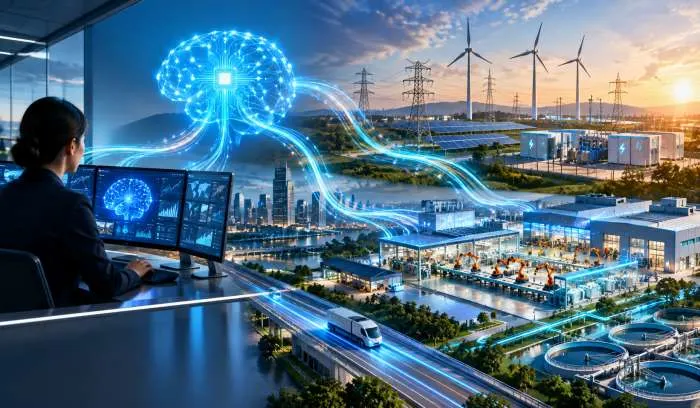
Technology moves fast. What was hot last year is old news now. The question "which technology is trending today" has a clear answer in 2026. The biggest shift is AI moving from screens into the physical world. Energy, medicine, materials, and manufacturing are now the frontier.
This article covers the top trends in technology today. We look at what is happening globally and what is trending in India.
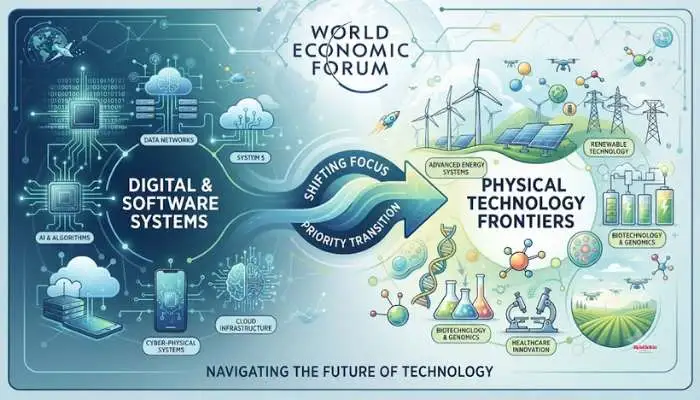
For years, the biggest tech stories were about apps and software. That is changing. The World Economic Forum's Top 10 Emerging Technologies of 2026 report shows a decisive shift. Eight of the ten technologies on the list work directly on physical systems .
The report says competitive advantage is moving from software capability to control over infrastructure, materials, biological processes, and industrial data .
Here is what is trending:
Buildings, vehicles, and factories can now act as both energy consumers and suppliers. They store electricity and send it back to the grid when needed. This makes energy systems more resilient and uses local renewable power better .
Traditional lithium extraction takes months using evaporation ponds. New technology pulls battery-grade lithium from brine in hours. It uses less land and water. This could unlock new sources of a critical battery material .
These materials cool buildings without using any electricity. They reflect sunlight and release heat into the atmosphere. They are already used in paints, films, and roof tiles. California and China have added them to building codes .
PFAS are called "forever chemicals" because they are so hard to break down. New technologies use supercritical water, electrochemical treatment, and UV light to destroy them. This helps clean drinking water .
Microorganisms are programmed to produce proteins and fats at industrial scale. This reduces dependence on land, climate, and livestock. Dairy and egg proteins made this way are already on the market .
Exosomes are natural particles produced by cells. They can be engineered to deliver drugs precisely to diseased cells. They can cross the blood-brain barrier. Over 200 clinical trials are underway .
These vaccines are designed based on a patient's tumor mutations. They train the immune system to find and destroy cancer cells. Trials in pancreatic cancer and melanoma have shown positive results .
Quantum computers model molecular interactions with unprecedented accuracy. This helps researchers find promising drug candidates faster .
AI systems build a shared understanding of physical environments using multiple forms of data. This improves how machines predict, plan, and interact with the real world .
This is designed to protect data from being decrypted by future quantum computers. It secures digital infrastructure as quantum computing advances .
Read More: Latest AI Developments in India 2026: Key AI Growth
India is moving fast in deep tech. Here is what is trending right now.
Indian deep tech startups are building in AI, quantum computing, semiconductors, space, synthetic biology, and clean energy. Nasscom's Emerge 50 list for 2026 shows 83% of applicants have reached Technology Readiness Level 6 or above. 39% are fully commercialized .
Agentic AI systems are moving into real-world applications in India. These are autonomous, task-oriented frameworks that can execute multi-step workflows. They are being deployed in manufacturing, defense, enterprise operations, and public services .
AI agents now write code, run tests, and deploy to production. Cursor is used by 64% of Fortune 500 companies. GitHub Copilot has 15 million users inside 90% of Fortune 100 companies . In India, enterprises are adopting these tools to accelerate development.
You May Also Read: Cybersecurity Threats News Today: India Under AI Attack
Here is a quick summary of the biggest trends:
| Trend | What It Means |
|---|---|
| AI in the Physical World | AI moving from software into energy, medicine, and materials |
| Agentic AI | AI that acts autonomously across workflows |
| Self-Building Software | AI agents that write, test, and deploy code |
| Sovereign AI Infrastructure | Countries building their own AI compute and models |
| World Models | AI that understands physical environments |
| Quantum Simulation | Quantum computers for drug discovery and materials |
| Post-Quantum Cryptography | Security for the quantum era |
| Personalized Medicine | mRNA cancer vaccines and exosome drug delivery |
| Clean Energy Tech | Everything-to-grid and direct lithium extraction |
| AI-Driven UI Customization | Generative AI tailoring enterprise apps |
The technology trending today is not just about better apps. It is about AI moving into the physical world. Energy, medicine, materials, and manufacturing are the new frontier. In India, AI and deep tech are driving a spending surge. Sovereign AI infrastructure, agentic AI, and self-building software are reshaping how enterprises work.
The common thread is AI. It is behind the shift in every sector. The question is no longer whether to adopt these technologies. It is how fast you can adapt.
AI is moving into the real world. Energy. Medicine. Materials. Manufacturing. That is the big shift. Agentic AI that takes action. Software that builds itself. Countries building their own AI compute. World models that understand physical spaces. Quantum simulation for drug discovery. Post-quantum security. These are the top trends.
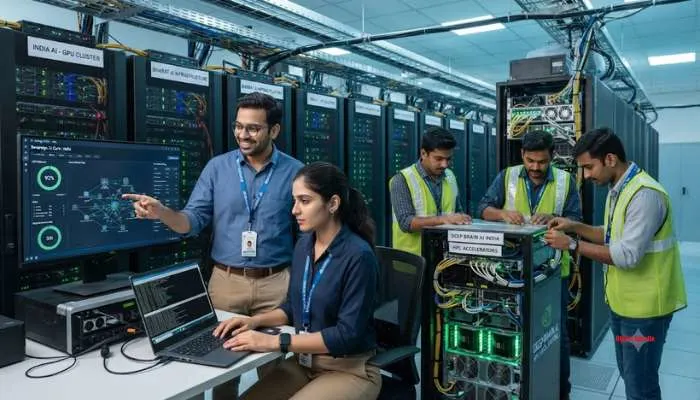
AI and machine learning lead. 74% of Indian deep tech startups use AI. IT spending is growing 6-8%. That beats global rates. India has 62,000 GPUs deployed for AI. Deep tech covers quantum, semiconductors, space, and clean energy.
Everything-to-grid energy. Direct lithium extraction. Cooling materials that use no power. PFAS destruction. Precision fermentation. Exosome drug delivery. Personalized mRNA cancer vaccines. Quantum simulation. World models. Lattice-based cryptography. That is the list from the World Economic Forum.
Software alone is not enough anymore. The edge comes from controlling infrastructure, materials, and biological processes. AI is now used in energy grids, drug discovery, manufacturing, and climate solutions.
AI that acts on its own. It understands context. It runs multi-step workflows. It completes tasks without you telling it every step. Not just answering questions. Taking action across apps. Companies use it in manufacturing, defense, and public services.