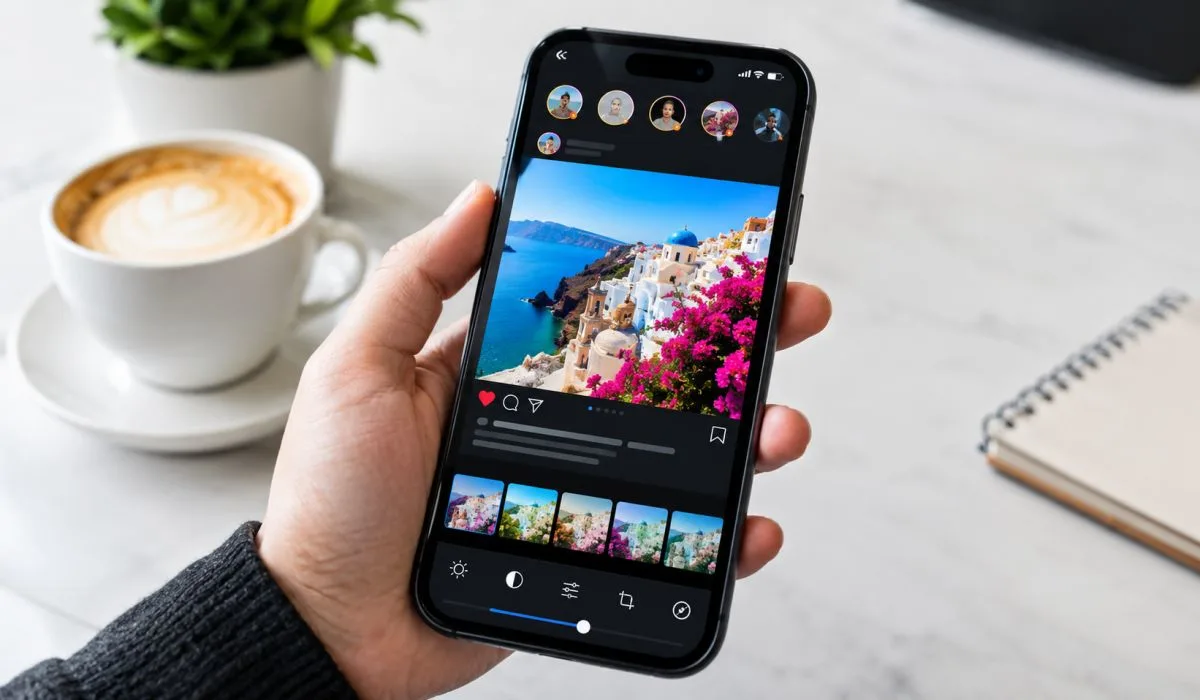
Best Photo Slideshow Maker for Instagram: Free and Easy
Instagram is a visual platform. Static photos blend into the feed. A slideshow stops the scroll. It keeps people watching...
Gadgets & Technologies Are Together
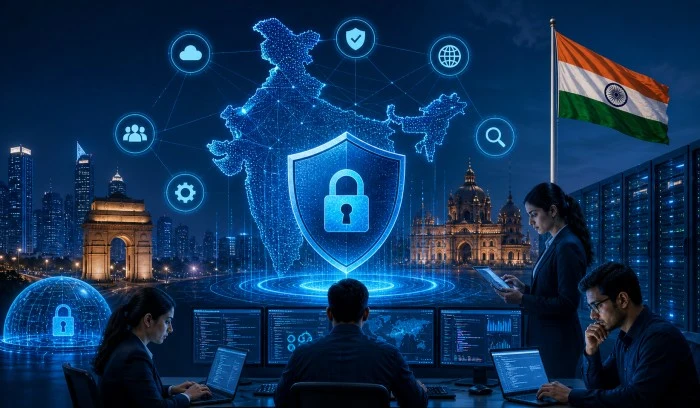
Cybersecurity isn't just some IT chore anymore it's a must-have for any business touching the online world, handling customer info, or relying on cloud setups. Indian companies get this now, ramping up with smarter tools, tougher defenses, and broader help. No wonder folks hunt for a handy top 10 list of Indian cybersecurity companies in 2026, like a quick slideshow roundup of reliable players.
India's online boom keeps accelerating. Think online payments, remote teams, cloud tools, and apps on every phone. But threats are exploding too data grabs, phony logins, site hacks, system takeovers. They hit small shops and giants alike. Smart cybersecurity firms step in early, spotting holes and locking things down for everyday operations.
Too many outfits wait for a breach to care about security. That spells disaster massive fixes, steep bills, trashed reputation. Flip it: partner with pros who sniff out trouble ahead of time. In India, where cloud reliance and digital customer hubs rule, this is non-negotiable.
It ties into rules and image too. Safe data builds buyer faith. Teams breathe easier with stable, monitored setups. That's driving Indian spends on scans, watches, breach drills, and employee smarts.
Read More: How to Make Animated Slideshow for School Projects Free 2026
TCS isn't just a service giant anymore. They’ve gone full "Platform-as-a-Defense." Their Cognitive Business Operations (CBO) unit is currently the heavy lifter for the Top 10 Indian Cybersecurity Companies 2026 list.
Real-World Scenario: Last quarter, a Tier-1 Indian bank faced a massive "Credential Stuffing" attack. TCS’s AI didn't just block the IPs. It identified the specific bot-pattern, spoofed a successful login to a "honeypot" environment, and gathered enough telemetry to help local authorities track the command-and-control server to a basement in Eastern Europe.
The Hot Take: Everyone talks about "Agility," but in a crisis, I’ll take "Scale." TCS has the telemetry of half the Fortune 500. Their AI learns from everyone’s mistakes simultaneously. That’s a massive, unfair advantage.
Under-the-Hood: They’re using Generative Adversarial Networks (GANs) to create "Synthetic Breach Data." They train their defense models on attacks that haven't even happened in the wild yet.
Remember when Quick Heal was just a box you bought at a mall? Those days are dead. In 2026, their "SEQRITE" platform is a beast. They are the only ones truly cracking the "Work-from-Anywhere" security puzzle for India’s massive SME sector.
Real-World Scenario: A small logistics firm in Ludhiana was hit by a "Living-off-the-Land" (LotL) attack. No malware files were downloaded. The attackers used the firm’s own PowerShell scripts against them. Quick Heal’s HawkkHunt flagged the behavior, not the file. Total damage? Zero.
The Hot Take: The "Endpoint" is the new battlefield. While the big boys fight over the Cloud, Quick Heal is winning the war on the laptop and the mobile phone. That’s where the humans are. And humans are the weakest link.
Under-the-Hood: They’ve integrated eXtended Detection and Response (XDR) with a proprietary "Behavioral Heuristic Engine" that runs locally on the device without hogging the RAM.
Pro-Tip: Stop focusing on "Prevention." Start focusing on "Dwell Time." If an attacker is in your network, how long does it take you to kick them out? If it’s more than 10 minutes, you’ve already lost.
HCLTech is where the "heavy lifting" of cybersecurity happens. They are currently the preferred partner for the Top 10 Indian Cybersecurity Companies 2026 when it comes to securing AI-driven supply chains.
Real-World Scenario: A major semiconductor manufacturer used HCLTech to secure their digital twins. An attacker tried to slightly alter the "Pressure Specs" of a fabrication machine via a firmware hack. HCLTech’s "Zero-Trust Engineering" caught the anomaly in the digital twin before it ever touched the physical machine.
The Hot Take: "Security-by-Design" is usually a lie. Most companies bolt security on at the end. HCLTech is one of the few actually baking it into the silicon and the code from Day One.
Under-the-Hood: They utilize Quantum-Resistant Encryption (QRE). They’re preparing for the day a Quantum computer can crack standard RSA keys. It’s paranoid, but it’s smart.
Wipro has pivoted hard toward "Embodied AI." They aren't just securing servers; they are securing the drones, the automated warehouses, and the 5G-connected factory floors of the "New India."
Real-World Scenario: Think of a drone delivery network in Bangalore. Wipro’s "CyberShield" manages the "Trust Score" of every drone in the air. If a drone starts acting "erratic"—perhaps a signal-jamming attempt—it’s instantly cut off from the central grid.
The Hot Take: Your biggest threat isn't a hacker in a hoodie. It’s a "Hallucinating AI." Wipro is building the guardrails to make sure your own automation doesn't accidentally leak your customer database.
Under-the-Hood: They use Federated Learning. The AI learns from different client environments without ever actually "seeing" the private data. It keeps the insights but dumps the liability.
Safe Security (the artists formerly known as Lucideus) have mastered the art of the "Cyber Dollar." They’ve successfully moved the Top 10 Indian Cybersecurity Companies 2026 conversation from the server room to the Boardroom.
Real-World Scenario: A CEO asks, "Are we safe?" Usually, the CISO stammers about patches. With Safe Security, the CISO says, "We have a $4.2 million exposure in our HR portal, but we can reduce it to $200k with a $50k investment." That’s how you get a budget.
The Hot Take: Vulnerability scanners are a dime a dozen. What’s rare is "Context." Safe Security gives context. They tell you which fire to put out first while your house is burning.
Under-the-Hood: Their SAFE One platform uses a Bayesian Network model to calculate the probability of a breach based on thousands of live signals. It’s basically "Moneyball" for cybersecurity.
Pro-Tip: If your CISO can't explain your risk in terms of EBITDA or Revenue Loss, you need a new CISO. The era of "Technical Mumbo-Jumbo" is over.
CloudSEK is the "Pre-Cog" of the bunch. They specialize in the "External Attack Surface." They are the ones lurking in the dark web forums so you don't have to.
Real-World Scenario: Last month, an "Initial Access Broker" was selling login credentials for a major Indian fintech app on a Russian forum. CloudSEK’s XVigil found the post 12 minutes after it went live. The fintech app reset the credentials before the buyer could even log in.
The Hot Take: Internal security is only half the battle. If your employees are using "Password123" for their personal Netflix accounts, your enterprise is at risk. CloudSEK finds those leaks.
Under-the-Hood: They use Large Language Models (LLMs) specifically fine-tuned to understand "Hacker Slang" across multiple languages (Russian, Mandarin, Portuguese) to scrap data from private telegram channels.
Tech Mahindra has taken the "Zero-Trust" buzzword and actually made it work at scale. They are the "Integration Kings" of the Top 10 Indian Cybersecurity Companies 2026.
Real-World Scenario: A global retail chain with 5,000 locations needed a unified security policy. Tech Mahindra implemented a "Software-Defined Perimeter" that allowed a cashier in Chennai and a manager in New York to access the same app with completely different, context-aware permissions.
The Hot Take: Zero-Trust isn't a product; it’s a mindset. It’s the digital equivalent of "Guilty until proven innocent." It sounds harsh, but in 2026, it’s the only way to survive.
Under-the-Hood: They leverage Micro-segmentation at the container level. Even if a hacker gets into one part of your app, they are trapped in a "digital shoebox." They can't move sideways.
Cyient is unique. They focus on Operational Technology (OT). We’re talking about power plants, water treatment facilities, and rail networks.
Real-World Scenario: An attempt was made to manipulate the "Chemical Feed" of a municipal water plant. Cyient’s "Hardened OT" sensors caught the command—which looked legitimate on paper but defied the "Physics of the System." The command was rejected.
The Hot Take: When a bank gets hacked, you lose money. When a power grid gets hacked, people die. Cyient is playing a much more dangerous game than the rest of the Top 10 Indian Cybersecurity Companies 2026.
Under-the-Hood: They use Explainable AI (XAI). When the system blocks a command, it tells the human operator exactly why it thought the command was malicious. No "Black Box" logic allowed.
Infosys has moved beyond defense into "Recovery." They’ve realized that in 2026, you will get hit. The only question is: how fast can you stand back up?
Real-World Scenario: A massive ransomware attack wiped the primary servers of a global logistics firm. Using Infosys’s "Cyber Resilience" vault, they restored the entire environment from an "Air-Gapped" backup in under 4 hours. No ransom paid.
The Hot Take: If your backup plan is "We’ll figure it out when it happens," you’re a ransomware victim in waiting. Infosys sells the "Digital Spare Tire."
Under-the-Hood: They utilize Immutable Storage and "Clean Room" restoration environments where data is scanned for latent malware before it’s put back into production.
eScan (MicroWorld) is the "CSI" of the Indian cyber world. They are the ones called in when the smoke clears to find out exactly what happened and who did it.
Real-World Scenario: During a complex intellectual property theft case, eScan’s forensic tools were able to reconstruct "deleted" file fragments from a suspect’s encrypted drive, proving that the data was exfiltrated via an unauthorized cloud account.
The Hot Take: Most security companies focus on "Locks." eScan focuses on "Fingerprints." In 2026, attribution is everything. If you don't know who hit you, you can't stop them from doing it again.
Under-the-Hood: Their Terminal Services Protection provides a specialized layer for remote desktop protocols, which are currently the #1 entry point for ransomware in India.
Vet these:
Top partners prevent, not just patch. Ongoing scans, watches, plans beat react-mode every time. In 2026, go active.
You May Also Read: 15 Automation Tools That Save Companies Millions
This screams slideshow or carousel snappy for phones. Try:
Keeps it scannable and pro.
Look, 2026's top 10 Indian cybersecurity companies list? It's your shortcut to not getting burned. From Quick Heal's no-brainer home shields to TCS handling the mega-jobs, grab what fits your mess threats, budget, size. I've seen outfits regret skimping; don't join 'em. Pick smart, stay ahead, keep the lights on and trust intact. Done.
TCS is out front on enterprise cloud security built for India-style attacks. Quick Heal's Seqrite brand nails easy, solid virus and endpoint defense for SMEs. Wipro and Infosys round it out with big managed security setups.
Seqrite (Quick Heal's business side) or Kratikal fit startups great—cheap VAPT, quick app security scans, and they scale up as you do.
Wipro and Infosys crush massive operations with nonstop SOCs, compliance help, and always-on threat watches. TCS brings enterprise cloud security and identity tools too.
They know local tricks like UPI phishing or Indian ransomware, cost way less than Western options, and fix things fast with teams in your time zone.
Kratikal leads on awareness training and VAPT to stop dumb errors like phishing clicks. Cert-In approved, they do ISO/SOC 2 audits as well.