New AI Features in Productivity Software: What Changed in 2026
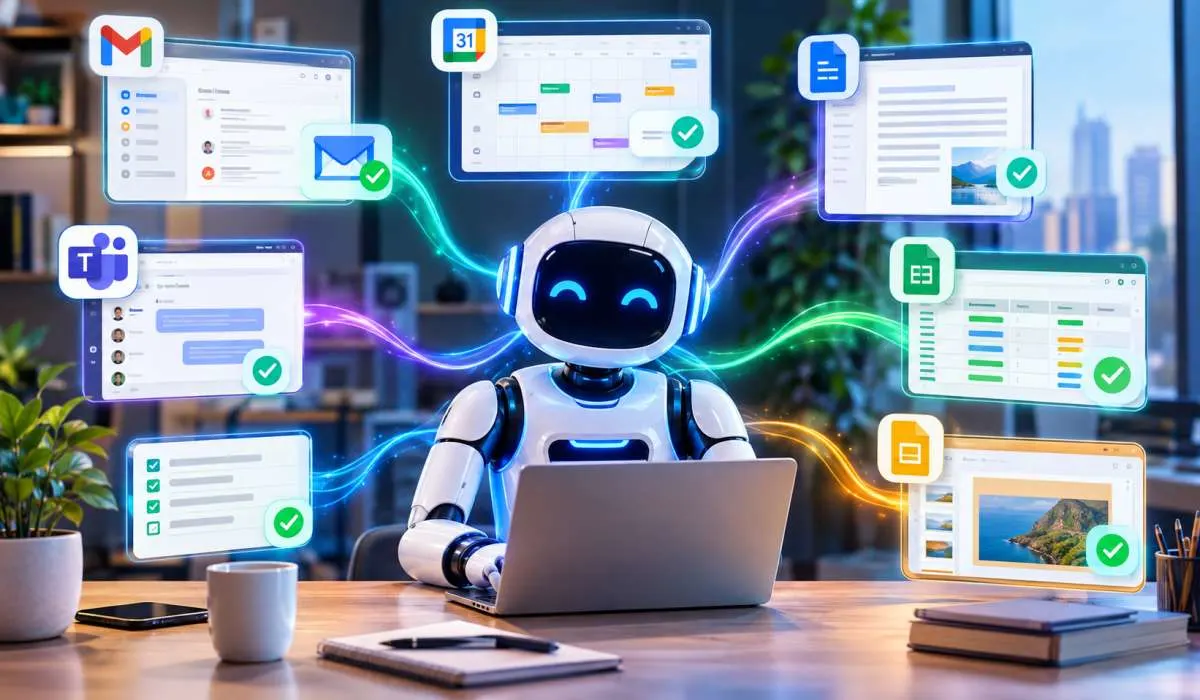
Productivity software changed a lot this year. The big shift? AI stopped just answering questions. Now it does the work. New...
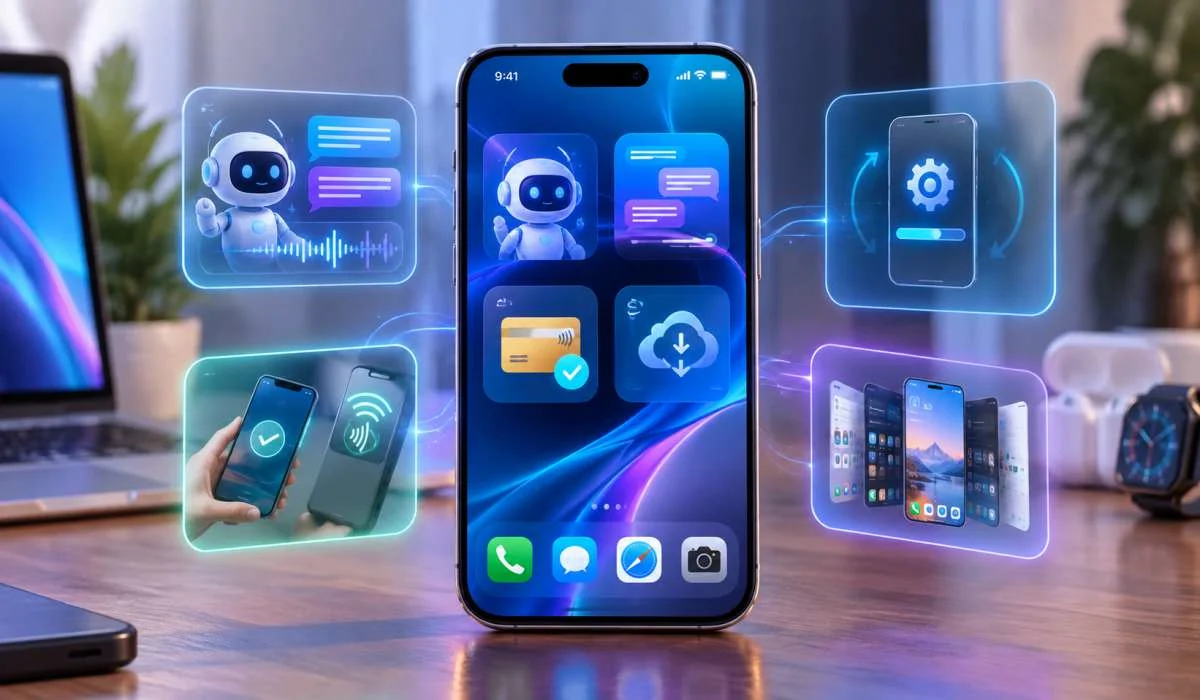
Gadgets & Technologies Are Together

Software is changing fast. The latest software features 2026 are not small updates. They are fundamental shifts in how we build and use software. AI agents now write, test, and deploy code. Applications can customise themselves without developers.
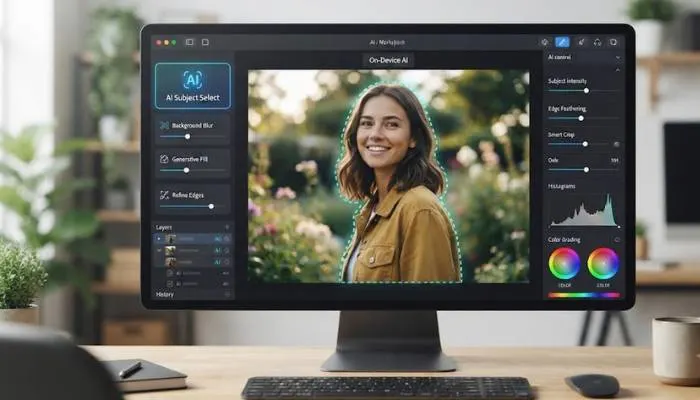
Creative tools have AI that auto-generates captions and isolates subjects. Self-building software is no longer a research project. Multi-agent systems handle requirements, coding, testing, and deployment. But challenges remain. 45% of AI-generated code fails security tests. Developers need new skills to manage AI agents. This article covers the biggest trends and features shaping the software industry this year.
The biggest change in 2026 is the rise of AI agents in software development. This is being called the third major shift in software engineering, after open source and DevOps .
AI agents are not just assistants that complete lines of code. They can reason, plan, and take on entire projects . They can write code, run tests, and deploy to production with limited human help .
Read More: Unique App Features for Startups That Work in 2026

Application software today has features that were unthinkable a few years ago. Here are the key ones.
The most important new feature is embedded AI. Applications now have AI that can act on your behalf, not just respond to commands .
In creative tools: Final Cut Pro uses on-device AI to generate captions automatically and detect edit points in video . Auto Mask isolates subjects like skin, hair, sky, and foliage without manual tracking .
In office apps: Keynote, Pages, and Numbers now let users generate vector shapes and edit images with natural language .
In music creation: Logic Pro's Chord ID analyses harmonic structure including extended chords and inversions, even on distorted guitar tracks .
Software is getting smarter about adapting to users. Generative AI is powering UI customisation for ERP, CRM, and banking apps . Instead of hiring developers to customise, vendors are using AI to do it faster . This is a major shift in how application software is delivered.
This is the biggest feature trend. Capgemini's 2026 report calls "software that builds itself" a defining shift in enterprise technology .
Multi-agent systems handle different parts of development. A requirements agent generates user stories. A coding agent writes code. A testing agent catches bugs. A deployment agent handles release. An optimiser agent suggests improvements .
You May Also Read: What Are the Best Software Features? Ultimate Buying Guide
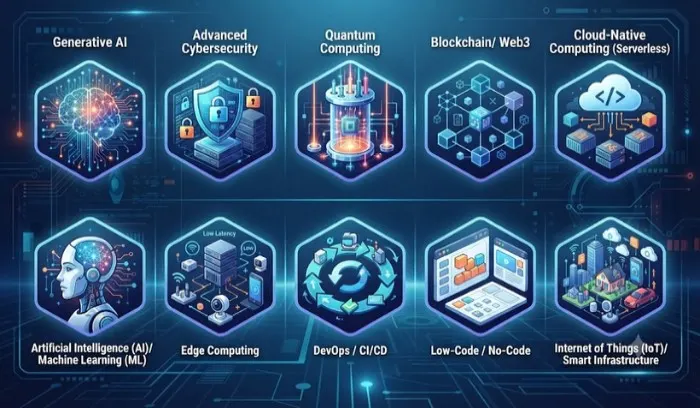
Here are the biggest technologies shaping software in 2026:
| Technology | What It Does |
|---|---|
| AI Native Development Platforms | Use GenAI for faster, easier software development |
| Agentic AI Systems | AI that acts autonomously across software lifecycles |
| AI Supercomputing Platforms | Processors, memory, and specialised hardware for data-intensive workloads |
| Multi-Agent Systems | Different AI agents handling specific development tasks |
| Domain-Specific Language Models | Custom AI models for specific industries |
| Physical AI | AI that operates in the real world (autonomous vehicles, robots) |
| Confidential Computing | Hardware-based security for sensitive data |
| Progressive Web Apps | Web apps with native-like performance |
| AI-Powered UI Customisation | Generative AI that tailors interfaces automatically |
| Self-Building Software | Multi-agent systems that write, test, and deploy code |
Developers are moving from writing code to guiding AI agents. The job looks less like coding and more like orchestrating intelligent tools . Senior developers are more productive because they know how to evaluate and review AI-generated code .
The best engineers in 2026 are defined by how well they manage AI processes, not by how fast they code. They juggle multiple coding agents, coordinate context, and translate business intent into working systems . Context switching is now a core skill .
For AI tools to work, data quality and consistency are crucial. Incomplete or inconsistent data leads to unreliable models . Organisations are learning this the hard way.
Here is the worrying part. 45% of AI-generated code fails security tests . Security failures reach 72% for Java . 75% of developers trust AI-generated code as much or more than human-written code, even while seeing insecure suggestions regularly . This is the real risk—not that AI writes bad code, but that it writes plausible-looking bad code that developers approve without proper review .
The latest software features 2026 show an industry in transformation. AI agents are moving from pilot to production. Self-building applications are no longer a research project. Application software is becoming smarter, more adaptive, and more autonomous.
But there are challenges. Security gaps are real. Data quality holds AI back. The skills needed are changing fast. For developers and organisations, the message is clear: learn to work with AI agents, not against them. Review their output carefully. Keep human oversight where it matters. That is how you win in 2026.
AI agents that write, test, and deploy code. Self-building applications. Generative AI for UI customisation. On-device AI in creative tools for auto-captioning and auto-masking. Applications that adapt to users without custom development. These are the biggest shifts this year.
Agentic AI means AI that can plan, reason, and act on its own. It does not just complete code. It handles entire projects from planning to deployment. This is considered the third major phase of software engineering after open source and DevOps .
AI is moving from a tool you use to a partner that acts for you. Applications now anticipate what you need. They can customise themselves. They can generate content, edit images, and transcribe audio without manual work. This is happening across creative, office, and enterprise software.
45% of AI-generated code fails security tests. 75% of developers trust it as much as human-written code. The real risk is that it looks correct but has vulnerabilities like SQL injection or hard-coded secrets. Human oversight and review are still essential .
Engineers need to manage AI agents, not just write code. They need to review and validate AI-generated code. They need to coordinate multiple AI tools. Context switching and business understanding are now core skills. The job is more about orchestration than syntax .